As part of the City Leaders Institute, Partners developed a Community Report Card to help civic leaders and citizens think about their community’s strengths and weaknesses in Aging in Place. The report card assesses 11 components and grades the community on how well it is doing in each component of agelessness.
- Community Design and Planning
- Arts, Culture and Lifelong Learning
- Housing
- Workforce Development
- Transportation and Mobility
- Local Leadership
- Health and Wellness
- Civic Engagement and Volunteer Opportunities
- Sustainability
- Public Safety and Services
- Equity of Opportunity
Read more »
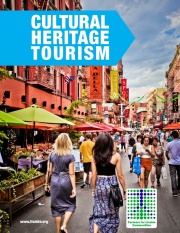
In our 37th year as an organization helping to empower communities with the tools to put them on the map as leaders in livability, Partners for Livable Communities is pleased to present this updated publication on cultural heritage tourism. As the tourism industry has boomed in the decades since Partners for Livable Communities began its cultural heritage tourism initiatives, communities have become increasingly eager to find ways attract tourists and capture the dollars they bring with them. However, when hard times come, it can be a challenge to persuade those among us of the benefits of preserving culture, heritage, and their artifacts from the past.
This guide represents the culmination of our experience and knowledge on an issue that has such a great potential for community development. Our hope is to demonstrate how cultural heritage is not just something to preserve for future generations, but is in fact an asset that can be leveraged to bring real economic benefits to the community.
Robert McNulty, president of Partners, can come to your community to speak about the necessity of developing a cultural heritage tourism strategy as well as share best practices and resources learned from Partners' decades of experience in this arena.
Download Cultural Heritage Tourism
Read more »
Partners compiled a collection of best practices of traditional community institutions incorporating health and wellness into their agenda and programming to improve community health. The best practices focus on improving the health of at least one of three constituencies: distressed communities, at-risk youth, and the vulnerable elderly.
Examples of institutions include arts and culture organizations, botanical gardens, community development corporations (CDCs), faith-based organizations, libraries, museums, public markets, and zoos.
Click here to download Creating the Healthy Community - Using All Assets: Institutions as Fulcrums of Change
Read more »
Terms:Aging, Community Building, Community Development, Community Engagement, Creating The Healthy Community, Cultural Institutions, Health & Wellness, Healthy Communities, Institutions as Fulcrums of Change , Intergenerational, Libraries, Program Areas, Public Health
The efforts of the City Leaders Institute team in Memphis, Tennessee were featured in the latest publication of Bridges, a quarterly journal of the St. Louis Federal Reserve.
The Plough Foundation and their program associate, Katie Midgley, have been leading the way to prepare Memphis for the increase in the number and share of older adults in the population. After researching the availability and quality of existing services as well as commissioning a survey of 500 older adults within the county, Plough identified home modifications supportive of the ability to age in place as its top priority within its aging agenda.
Memphis is participating in Partners for Livable Communities and MetLife Foundation’s City Leaders Institute on Aging in Place. The program is in its second year and has worked in fifteen communities across the country.
The Memphis team is working to develop a resource for older adults in Shelby County that will determine an individual’s home modification needs, direct the individual to services that can perform the modifications, and provide funding for those older adults unable to afford the modificiations needed to allow them to remain in their home for as long as possible.
Read more about the efforts in Memphis and the City Leaders Institute: The Graying of America: Preparing for What Comes Next (Bridges Fall 2013).
Learn more about the City Leaders Institute.
Check out the Plough Foundation website.
Read more »

For residents of Chicago’s northern suburbs, the Chicago Botanic Garden is much more than just a collection of colorful plants and flowers. Since it opened more than 40 years ago, the 385 acre grounds have served as an important center for community activity and education. The Garden is home to 26 separate gardens and four natural areas, as well as a conservation science education center and a library with one of the country’s largest collections of botanical books. The grounds are also host to numerous community events and educational courses throughout the year.
Read more »
Terms:Arts & Culture, Chicago, IL, Community Development, Creative Economy, Cultural Institutions, Design, Environment, IFC Best Practice, Institutions as Fulcrums of Change , Parks, Playgrounds & Gardens
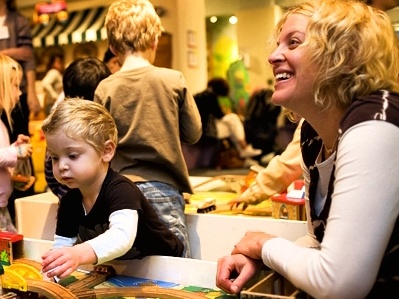
The Habitot Children’s Museum first opened its doors in downtown Berkley in 1998, and the institution has served over 950,000 residents of underserved communities in the Bay Area since. The 7,000 sq. foot facility is home to exhibits that help teach kids about the value of physical activity, water preservation, and art and culture. The hands-on Museum encourages early childhood education and aims to help support a generation of curious and creative kids.
Read more »
Terms:Arts & Culture, Community Building, Creative Economy, Cultural Institutions, Downtown Development, Education, Families, IFC Best Practice, Institutions as Fulcrums of Change , Museums, Youth
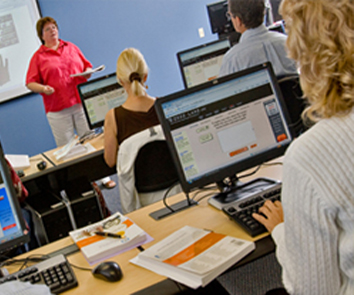
In today’s economic climate, trying to find a high-paying job without a college education is nearly impossible. That is why the leadership at Indiana University-Perdue University Indianapolis started their Community Learning Network that focuses on continuing education and lifelong learning. Each year the network provides more than 600 continuing education classes to over 7,000 residents in Central Indiana.
Read more »
The Strive Partnership is an effort launched by community leaders in the Cincinnati region in 2006 that relies on innovative strategies to improve student education outcomes. The Partnership has designed a strategic approach to education reform that can be applied to communities throughout the country. The approach relies on a collaborative effort from community stakeholders from all sectors of the economy to encourage learning and development beyond the walls of their schools.
Read more »
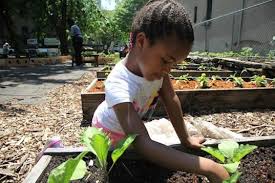
Head Start is a federal program designed to promote school readiness by enhancing the cognitive and emotional development of pre-school aged children. Through a program called “Eat Play Grow,” a series of obesity prevention classes are offered by the Children’s Museum of New York and the National Health Institute to be held in classrooms throughout New York City. Nonprofit groups throughout low-income areas in New York teach classes to children in underserved communities. Classes are held at common neighborhood institutions, such as community centers and libraries.
Read more »

The U.S. Armed Forces Retirement Home in Washington, D.C., commonly referred to as the ‘Soldiers’ Home,’ is one of the country’s oldest veterans’ retirement homes and certainly one of the most beautiful. Located on a 273-acre campus in Northwest D.C., the Home’s green pastures and tranquil lakes sit in stark contrast to the developed neighborhoods of the surrounding community. Since the home opened in 1851, the retirement community has been home to thousands of retired elderly and disabled veterans in the Washington area.
Read more »
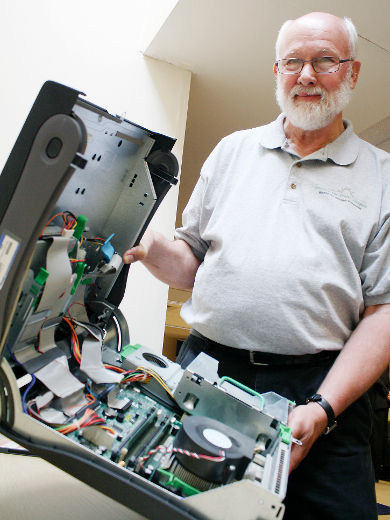
Project Phoenix is an intergenerational program based in Wellend, Ontario, just outside of Niagara, run jointly by the nonprofits Seniors for Youth Niagara and Youth Resources Niagara. The program aims to close the gap between seniors and youth for the purpose of improving the community by giving senior volunteers a chance to interact and share their knowledge and experience with at-risk youth in the area.
Read more »
Each year a number of organizations and publications, from the New York Post to The Economist and Bloomberg Businessweek, devise a list of the most ‘livable’ cities in America and the world. Then, without fail, every year, waves of critics denounce the list for being biased towards certain cities. This process illustrates how truly difficult it is come up with a singular definition of the term ‘livability’. Each publication has their own formula that generally includes ratings that represent each city’s access to affordable housing, cost of living, quality of education, and amount of cultural amenities, among the many other components that determine a city’s livability. How these factors are weighted in the formula depends on the interests and goals of the publication.
Read more »
With the mentorship and support of long-time Partners colleague William K. Reilly, Partners has developed the City Resilient Awards Program to embody a new civic movement: Prosperous, Sustainable, and Fair.
The awards program will replace Partners' once-a-decade recognition of America's Most Livable Community, last given in 2004. Partners defines resilience to encompass a diverse range of elements, including a strong economy with equal opportunity, high quality public education, affordable health services, accessible public transportation, and the capacity to persevere through environmental, economic, and social hardships. Furthermore, a resilient city is an inclusive one: all residents should be involved in the process of creating a more prosperous city, giving voice to the full range of ideas and perspectives of the population.
In the City Resilient program prospectus, Partners outlines this vision:
Read more »
When Dr. Gordon Streib, a sociology professor at the University of Florida, first pitched the idea of sponsoring a retirement community on the UF campus in 1997, it was understandably met with skepticism by the University leadership. It would seem difficult for the late-night lifestyles of college students and the generally more peaceful temperaments of senior citizens to coexist. Nearly 10 years after the retirement community opened its doors in 2004, however, the establishment of the Oak Hammock Retirement Home has proven to be such a resounding success that there is already a waiting list to get in.
Read more »

As climate change remains contentious topic in American politics on the federal level, more and more cities are taking it upon themselves to find solutions that will address this growing problem. Key West, Florida, is a popular tourist destination and also one of the most vulnerable places in the United States to rising sea levels. Like many places in South Florida, Key West is very flat, with many neighborhoods, including the downtown hub of tourist activity, reaching no higher than 3 ft. above sea level.
Read more »

Bird Tales is a therapeutic program for Alzheimer’s patients created by Randy Griffin, a dementia care specialist, and Ken Elkins, an Audubon Society employee. The two educate nursing-home staff members on ways to attract birds to their grounds, and give Alzheimer’s patients the tools necessary to develop bird-watching as a hobby. Participants get the chance to interact with birds on a multi-sensory level and come away with a meaningful experience that they can share with others. In nursing homes where this program has been implemented, the facilities have reported a reduction in the amount of medication necessary to treat Alzheimer’s patients, showing that the bird-watching is making a difference.
Read more »
As the baby-boomer population all reach the age of retirement, many older individuals are going to be forced into assisted living facilities. This article featured on PlaceMakers by Ben Brown highlights the ElderSpirit Community in Abingdon, VA, which on a relatively small budget, has created a community for older individuals that emphasizes people, skills, and needs.
"Among the Big Issues awaiting communities after we shake off the post-recession blues is what to do about demography. Particularly the part about America’s aging population.
The first-borns among the 76-million-strong Baby Boomer generation reached 65 in 2011. And over the next three decades, the geezer slice of the population pie will swell to 20 percent, compared to a little more than 13 percent in 2010. Take a look at the chart below, compiled from Census projections and pulled from the informative Alliance for Aging site.
That’s more than 88 million folks 65-plus, with the fastest growing cohorts the “oldest-old” segments of 80-plus.
I have a special interest in this topic, given that I’m among those leading-edge Boomers who have reconfigured commerce and culture to suit our tastes over the last half-century. It’s been a great run.
By now, just about everybody not invited to our long-running generational fiesta is tired of indulging Boomer fantasies. Sorry. Since we’re still running lots of stuff and still hoarding most of America’s financial assets, there’s more to come. Currently, we’re in the middle of one of our periodic – and probably our last – reality denial exercises. This is the one where we’re pretending Big Pharma, robots, electric cars and Dr. Oz will extend our playtime into infinity. You know, “60 is the new 40.” Unlike previous Boomer reality ducks, however, this one is going to be tough to buy or lie our way out of....."
Read More.
Read more »

By Diana Nash of the Pink Line Project on July 12, 2012
There is a buzzword circulating in the DC arts scene that I had not heard about until I returned to the city two months ago. While the concept of using the arts to spur economic and community development is not new, DC is getting attention for the success of its “Arts and Culture Temporiums” since the first one launched along the H Street NE corridor in 2010. Temporiums fall under the larger category of the Temporary Urbanism Initiative, a project undertaken by the DC Office of Planning. The goal behind the initiative, and more specifically, temporiums, is to activate vacant or underutilized spaces by using them to showcase the talent of local artists and other creative entrepreneurs, along with the retail potential that lies within emerging neighborhoods. Think of them as “Pop Ups” that stay around a little longer and have greater potential benefits for the communities where they take place. Jessica Scheuerman, of Partners for Livable Communities, explains that temporiums allow people to “take risks, explore partnerships, and to commit to something” without the burden of a long-term commitment. Temporiums connect creative people seeking affordable space in their neighborhoods with landlords who have the available space that they haven’t been able to lease. It is a smart and increasingly popular concept that lays the groundwork for longer-term collaboration between property owners and neighborhood entrepreneurs.
Building on the success of earlier temporiums, the Office of Planning is targeting four emerging creative neighborhoods to benefit from a $250,000 grant to the city from ArtPlace, an unprecedented new private-public organization. ArtPlace is part of a national “creative place-making” movement that aims to drive revitalization across the country with arts at the center of economic development. The launch of DeanwoodxDesign marks the next step in the OP/ArtPlace grant initiative.
Read more »
Terms:2012, Announcements, Arts & Culture, CBC Press/Media, Community Building, Creative Economy, Culture Builds Communities, Neighborhood Revitalization, Other Events, Public Art, Washington, DC
 photo credit National Senior Games AssociationThe Good Life Games of Pinellas County encourage adults 50 and over to participate in their own “Senior Olympics,” to promote athleticism and healthy lifestyles. Many older adults are intimidated by the idea of athletic competition, out of fear that an injury or lameness could permanently limit their mobility. Specifically designed to meet the physical capabilities of older adults, the Olympic-style games include archery, track and field, swimming, cycling, and others. Players in Good Life Games are also eligible for statewide and national competitions. photo credit National Senior Games AssociationThe Good Life Games of Pinellas County encourage adults 50 and over to participate in their own “Senior Olympics,” to promote athleticism and healthy lifestyles. Many older adults are intimidated by the idea of athletic competition, out of fear that an injury or lameness could permanently limit their mobility. Specifically designed to meet the physical capabilities of older adults, the Olympic-style games include archery, track and field, swimming, cycling, and others. Players in Good Life Games are also eligible for statewide and national competitions.
Read more »
|
|


