Washington, DC
Households that replace just a few old incandescent light bulbs with LED bulbs, a product with more than three times the lifespan of their traditional counterparts, can reduce electric bills and put a dent in their carbon footprint. Imagine the impact of replacing 4,424,361 light bulbs. This is the number of streetlights in our nation’s ten largest metropolitan statistical areas. According to a study released in March of 2008, switching all streetlights in these major regions to an LED or a “smart streetlights” system could lead to a savings of 1,494,250,000 kilowatts (kWh) or a reduction of 1,161,716 metric tons of carbon dioxide (CO2). This report wasn’t produced by the EPA or a national LED manufacturer; in fact, this white paper was prepared by Bob Grow, then an American Chamber of Commerce Executives Ford Fellow in Regionalism and Sustainable Development for the Greater Washington Board of Trade.
Read more »
Charleston, SC
With a 63 percent increase in their population between 1970 and 2000, and projections for an additional 55 percent increase by 2030, the Charleston Metro Area is not grappling with the question of whether they will grow, but how they will grow. Sprawling development and the rapid consumption of resources is something that many communities in the U.S. are facing but not all have an effective action plan to help mitigate environmental damage and ensure future vitality. Guided by their mission to advance the region’s economy, improve local quality of life and enhance their members’ success, the Charleston Metro Chamber of Commerce has developed “A Sustainable Growth Ethic: Building on Prosperity” to encourage sustainable development in the region. The Sustainable Growth Ethic is not a binding policy piece, but a straightforward statement of visions and values that rests upon three major principles: Choice, Balance, and Stewardship.
Read more »
Southwest, IN
With a steadfast commitment to bringing cutting-edge economic and development issues to their members, the Chamber of Commerce of Southwest Indiana hosted the Regional Sustainability Conference on October 28th, 2009 in collaboration with the Wesselman Nature Society. Participants of the conference gathered in downtown Evansville to engage in interactive panel discussions featuring representatives of regional firms participating in sustainable business practices, attend breakout sessions that explored issues from waste stream reduction to marketplace trends, and hear from a number of keynote speakers focusing on “big picture” issues.
Read more »
Grand Rapids, MI
After witnessing the myriad of green business programs spreading across the country, it did not take long for the Grand Rapids Area Chamber of Commerce to establish itself as a leader in the movement. Though the Chamber has been a participant and supporter of local sustainability campaigns for some time, it now boasts a strong program of its own for the benefit of its members and that of the region. Officially launched on January 6th, 2010, the Greater Grand Rapids Partnership for a Sustainable Community provides participating businesses the tools to become more energy efficient, reduce operating costs and boost their bottom lines.
Read more »
Asheville, NC
Though countless businesses around the country are implementing new practices to reduce their environmental impact, the carbon-emitting necessity of travel is often beyond their control. Even the greenest of employees find themselves towing briefcases filled with recycled paper onto an airplane that burns nearly a gallon of fuel every second. Those individuals traveling to Asheville, North Carolina, however, can fly through clean skies with a clean conscience. Thanks to the innovative Asheville Offset program of the Asheville Area Chamber of Commerce’s Convention and Visitors Bureau, visitors have the opportunity to counteract carbon emissions produced from their travel. Through this program, Asheville can continue to protect the great natural amenities that have supported a tourist economy for decades.
Read more »
State of Massachusetts
The 495/MetroWest region is one of the most economically productive in the state of Massachusetts and is still growing. Between 1980 and 2006, the region experienced a 59 percent increase in employment; during the 1990s alone, the region experienced a 12.1 percent increase in the local population. Though this trend is immensely beneficial to the area’s economic health, it also places a great strain on existing infrastructure and water supplies. More than 40 acres of open land per day, or nearly 300 acres every week in Massachusetts are converted into residential, commercial, or industrial land, putting local resources and biodiversity at risk. As a public/private association dedicated to the sustainable economic and physical growth of the region, the 495/MetroWest Partnership provides local businesses and governments with an effective strategy to ease burdens on local resources and ensure their future vitality through the Green Infrastructure Toolkit.
Read more »
This report showcases the innovation and leadership of 22 chambers of  commerce that when faced with the challenge of ensuring the future strength of their economies, have employed creative new agendas that not only help reverse the effects of environmental degradation but leverage the occasion for valuable economic and social gain. Click here to download the report. commerce that when faced with the challenge of ensuring the future strength of their economies, have employed creative new agendas that not only help reverse the effects of environmental degradation but leverage the occasion for valuable economic and social gain. Click here to download the report.
Read more »
In his firs 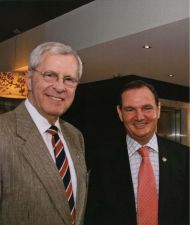 t trip “Down Under”, Chattanooga Mayor Ron Littlefield found many similarities between his community and that of Mayor Paul Pisasale of Ipswich, Australia. Both cities are essentially bisected by waterways and both are focusing on returning to the riverfront, quality of life and sustainable development as keys to a brighter future. “I was very impressed by all that I saw there,” said Littlefield. “Both cities have the same heart. Ipswich even has a walking bridge using an old railroad trestle which mirrors our restored Walnut Street Bridge in downtown Chattanooga.” Littlefield noted that other features were remarkable such as both cities having railroad museums and even such interesting details as back-in angle parking in the downtown area. “We thought that we were doing something different in Chattanooga” Littlefield noted. Mayor Littlefield was invited to Australia to talk about Chattanooga’s transformation from “the most polluted city in America” in 1969 to a clean, green co  mmunity of today that regularly the 2 mayors makes top ten lists of most livable cities. While in Australia, he also spoke to attendees at a conference sponsored by the International Riverfoundation, to a gathering of members of Partners for Livable Communities Australia, and a meeting of the Moreton Regional Council. In a meeting with executives of Cisco Systems in Brisbane, Littlefield outlined Chattanooga’s world class fiber optic smart grid system that is moving his community ahead in the digital age and “once more, putting Chattanooga on the short list of progressive cities”.
Current Secretary of Transportation, Ray LaHood, has long been a strong proponent for the creation of livable and sustainable communities.
Following an exciting appearance at the National Bike Summit’s Congressional Reception on March 15th, LaHood unveiled some new policy guidelines that will, in his words, “[integrate] the needs of bicyclists in federally-funded road projects.” Such policy changes will include raising the bar on design standards, additional data collection about current walking and biking trips, the protection of sidewalks and shared-use paths, and efforts to encourage respect for nonmotorized transportation modes. In a recent interview with Green Inc., posted in the New York Times, LaHood explains his new ideas, their impact, and defends his position against the harsh words of critics.
To read the full interview click here.
Read more »
 This is a Compendium of Community Aging Initiatives, which was made possible by generous support from MetLife Foundation. The Compendium provides information on 121 initiatives and organizations across the country that are helping communities become more aging friendly. The goal of this project is to shorten the learning curve through continued information sharing and cross-learning, so please feel free to distribute this report to other individuals or organizations who may find it useful. The report was produced by the Center for the Advanced Study of Aging Services at University of California Berkley. Click here to download the Report.
Read more »
Governing magazine founder Peter Harkness writes about how local business and governmental entities are taking action on climate change issues in their communities.
Read more »
|
|

