 photo credit Lifetime Arts photo credit Lifetime Arts
Founded in 2008, Lifetime Arts promotes arts programming designed to engage older adults. A nonprofit organization, Lifetime Arts is committed to developing innovative programs which support creative aging and lifelong learning. To that end, Lifetime Arts offers a variety of services and programs. The organization is a clearinghouse for best practices; provides technical assistance, information services, and professional development to the individuals and organizations serving older adults through the arts; and helps to develop policy to enhance the quality of arts programs for older adults throughout the country.
As a service organization, Lifetime Arts developed Creative Aging in Our Communities: The Public Libraries Project, a program which demonstrates the viability and value of instructional arts programs offered in public libraries as a way to build a broad base of support for creative aging programming. The Public Libraries Project showcases the library as a center for access and learning for older adults; an “age-neutral” public space, the library is an accessible hub for older adults who are reluctant to go to senior centers, and is swiftly becoming an ideal center for programs that interest seniors.
Read more »
Terms:2012, Aging, AIP Best Practice, Arts & Culture, City Leaders Institute on Aging in Place, Community Engagement, Cultural Institutions, Culture Builds Communities, Life-Long Learning, New York City, NY, Rural
 photo credit Phoenix New Times photo credit Phoenix New Times
The Arizona Science Center has long engaged adult volunteers age 50+ as docents, and in
other conventional volunteer roles, but only recently the Center began to tap volunteers’ science and technology skills to enhance its programs. Jan Stonebraker, the Science Center volunteer coordinator of four years, entered the position as the Center launched a large travelling exhibition titled Body Worlds 3, an exploration of biology and anatomy.
Stonebraker identified knowledgeable volunteers to help staff the exhibition. At around the same time, the Virginia G. Piper Charitable Trust funded a leadership grant program, through the National Council on Aging (NCOA), to engage adult volunteers age 50+ in leadership roles. The Science Center development staff and Stonebraker designed a program that would qualify for a grant. Stonebraker found that many volunteers were retired mechanical and electrical engineers, information technology specialists, and science teachers who wanted to help the Center. It made eminent sense to use their skills to enhance educational programs.
Read more »
Terms:2012, Aging, Aging in Place, AIP Best Practice, Arizona, City Leaders Institute on Aging in Place, Community Engagement, Education, Intergenerational, Jobs, Life-Long Learning, Museums, Public-Private Partnerships
 photo credit Northwood Park Historical Society photo credit Northwood Park Historical Society
The vision of the Norwood Park Historical Society (NPHS) is to be “recognized as a leader, educator, advocate, and resource” in the community of Norwood Park that “values and preserves its historic character and is acknowledged as an area of historical importance to the city of Chicago and the region.” To reach out to older adults, the NPHS launched Voices of Norwood Park, a personal-history project designed to educate older adults about methods for recording their histories and for collecting written and oral histories of their lives and times in Norwood Park.
Norwood Park is one of the oldest, most distinctive, and historically important neighborhoods in the Chicago metropolitan area. NPHS was formed in 1973 to preserve Norwood Park’s history and promote community awareness. The Society has transformed the oldest house in Chicago, which serves as its offices, into a multipurpose community center with a museum and a café. Its museum focuses on Chicago’s far-northwest side and has a growing collection of historical artifacts and research materials.
Read more »
Terms:2012, Aging, Aging in Place, AIP Best Practice, Chicago, IL, City Leaders Institute on Aging in Place, Community Engagement, Cultural Institutions, Heritage, Historic Preservation, Intergenerational
 photo credit Project SHINE photo credit Project SHINE
“When I first came to America, I only knew a couple letters. I couldn't communicate with anybody. And I learned about this program and I started (to learn English). I have been here for three years and now I have built a basic vocabulary that I can carry my daily life. It basically helped me to live in America." -Project SHINE participant
In the early 1980s, Nancy Henkin, founder and director of the Intergenerational Center at Temple University, was shocked by the news that loneliness and social isolation led an elderly Asian woman to commit suicide, at a time when it was commonly assumed that older immigrants were part of tight-knit and supportive communities. Henkin realized that older immigrants often struggle with language barriers, changes in customs, and differences in social roles more than their younger counterparts, and began working to establish a program that could support them. Project SHINE was launched in 1985, to reach out and provide aging immigrants with language and cultural resources to help them adapt in their new community.
Read more »
Terms:2012, Aging, Aging in Place, AIP Best Practice, City Leaders Institute on Aging in Place, Community Development, Community Engagement, Education, Faith Community, Families, Health & Wellness, Heritage, Immigration, Intergenerational, Jobs, Life-Long Learning, Multicultural, National, Youth
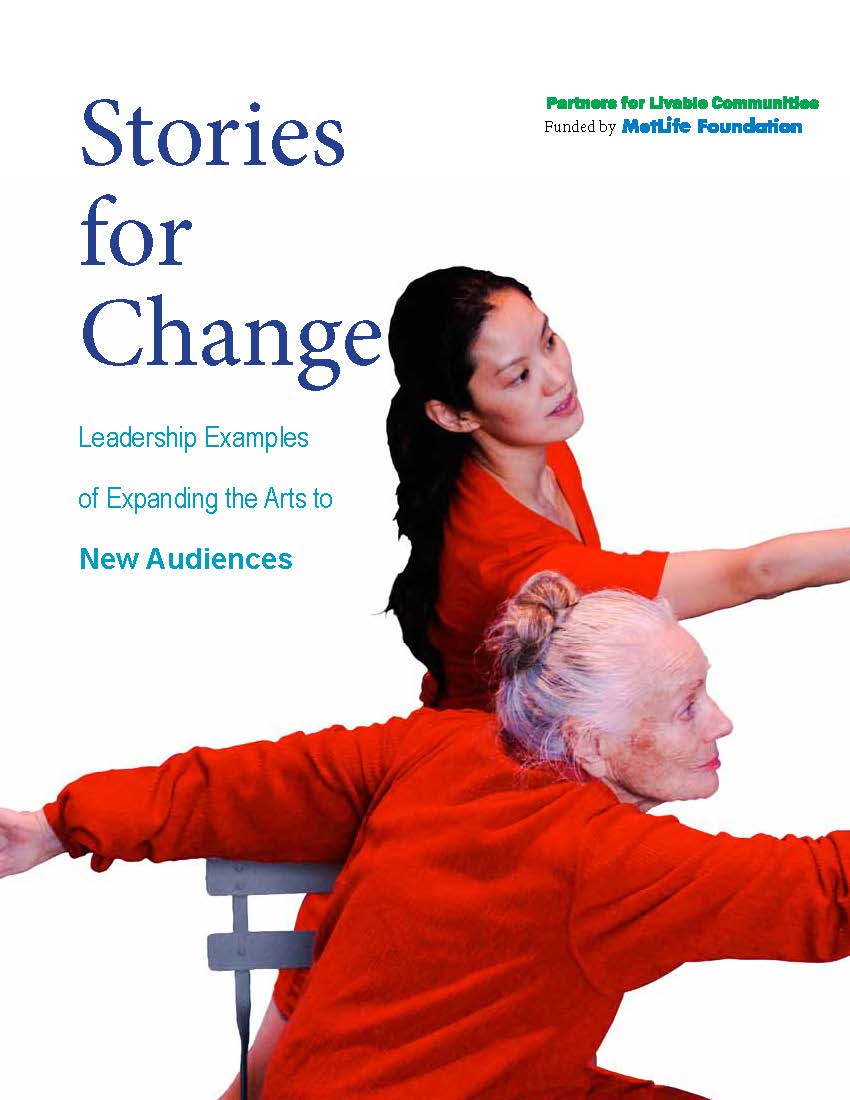 Partners for Livable Communities presents a PowerPoint presentation to accompany the 2012 Stories for Change report. This presentation is for community residents, city leaders, arts and cultural institutions, and many more to share the great stories of innovation and creativity featured in the Stories for Change report to begin discussions of reaching out to older adults and immigrants with the community. Partners for Livable Communities presents a PowerPoint presentation to accompany the 2012 Stories for Change report. This presentation is for community residents, city leaders, arts and cultural institutions, and many more to share the great stories of innovation and creativity featured in the Stories for Change report to begin discussions of reaching out to older adults and immigrants with the community.
Read more »
|
|

